Why are algae blooms are a public health concern?
Blue-green algae scum at Blue Lake
Exposure to toxic algae can pose health risks.
Algae are microscopic organisms that grow naturally in oceans and fresh waters. Under certain conditions, some algae can grow into a large visible mass called a bloom. Not all blooms are harmful, but some species of algae, such as cyanobacteria or blue-green algae, can produce toxins or poisons that can cause serious illness or death in pets, livestock, wildlife and humans.
Exposure to toxic algae occurs through skin contact or swallowing or inhaling droplets of affected water. This can cause a range of symptoms:
* Skin irritation or rash is the most commonly reported health effect.
* Other symptoms range from diarrhea, cramps and vomiting to fainting, numbness, dizziness, tingling and paralysis.
* The most severe reactions occur when large amounts of water are swallowed.
If you are visiting a lake where a bloom is in process:
* Stay out of the affected water.
* Keep children and pets away.
* If you touch the affected water, wash off thoroughly with another source of water.
* Never drink or cook with the affected water.
* Be aware that you cannot treat affected water. Boiling it will not kill the toxins nor have personal water filtration devices been proven effective in treating algae-affected water.
Fish caught in affected waters pose unknown health risks.
* If you choose to eat them, remove all fat, skin and organs before cooking because toxins are more likely to collect in these tissues.
* Crayfish or freshwater shellfish harvested from affected waters should not be eaten.
Don't let an algae bloom ruin your visit to the lake!
Outdoor activities, such as camping, picnicking, hiking, biking, bird watching and catch-and-release fishing are encouraged. Boating is safe as long as speeds don't whip up excessive water spray, which could create an inhalation risk.
Why are dogs a specific concern?
Oregon recorded its first laboratory-confirmed dog death due to toxic-algae in Sept., 2009.
* Additional dog death reports were received during 2009 that were considered probable algae-related due to the circumstances; however laboratory tests were not done so they cannot be classified as confirmed.
* This follows anecdotal reports over previous years of dog and livestock deaths attributable to toxic algae.
If you and your dog adventure out to lakes, rivers and streams, please be aware of the potential danger posed by cyanobacteria, or blue-green algae. It could save your pet’s life.
* Dogs are a specific concern because they do not discriminate between fresh water or algae-affected water. Their first reaction is often to go into the water or drink the water, quite often near the shore, where algae can accumulate.
Do not allow your dog to enter the water.
* If your dog does go in the water, don’t let him lick his fur and wash him off immediately with another source of water.
* Watch closely for any symptoms such as drooling, vomiting, weakness, staggering and convulsions call your veterinarian immediately. If treatment is delayed, the prospect for recovery dims.
Prevention is critical.
* If the water looks suspicious, don’t let your pet go in.
For more information please visit: http://www.oregon.gov/DHS/ph/hab/faqs.shtml
Monday, April 5, 2010

Wednesday, February 17, 2010
Canine Influenza (H3N8)
Canine Influenza (H3N8)
Let's start with what an influenza virus is. Influenza viruses represent a specific type of virus. There are actually three types (genera) of influenza viruses: type A (including the canine influenza virus), type B, and the less closely related type C. They produce fever, joint pain, and respiratory signs with which we are all familiar. Death is unusual but stems from respiratory complications and is most common in the very old and very young.
Date Reviewed/Revised: 01/15/2010
Influenza viruses of an assortment of varieties have been the subject of concern for humans, wildlife, and domestic animals for many decades. Dogs were largely felt to be exempt from “the flu” until 2004 when a new canine influenza virus, clearly stemming from the equine influenza virus, was isolated from several groups of Florida racing greyhounds. The problem seemed confined to the racing industry until 2005 when cases involving pet dogs began appearing in boarding facilities.
|

In the last weeks of September 2005 and continuing into October, numerous warnings to dog owners about a new lethal canine disease swept the Internet. Some of these warnings contained legitimate information while others contained half-truths or information that was simply wrong. Let's sort out the facts from the theories from the misinformation.
Here is an FAQ regarding this relatively new virus that has come to be considered part of the kennel cough complex.
What is Canine Influenza?
|
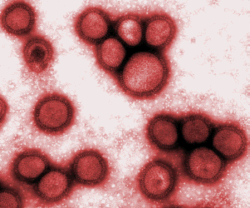
On its surface the virus has an assortment of proteins that determine its strain or subtype, and it is against these surface proteins that our bodies mount an immune response. If a viral strain mutates and sufficiently changes its surface proteins, a new strain is created. A new strain is one where the susceptible population has no immunity and infection can spread rapidly.
Unless a mutation occurs as described, influenza virus strains are specific to host species. Human influenza only infects humans. Equine influenza only infects horses. Canine influenza only infects dogs.
Molecular studies indicate that canine influenza represents a mutation from the equine influenza virus. Canine influenza was first confirmed in a racing greyhound in 2004 and has largely been a concern of the racing greyhound industry, particularly in Florida.
Starting in April 2005, the canine influenza virus has been seen in pet populations of many states besides Florida.
What Happens to the Sick Dogs?
Infection rate is high (depending on which report one reads) but 20-50% will simply make antibodies and clear the infection without any signs of illness at all.
The other 50-80% will get symptoms of the “flu:” they will have fevers, listlessness, coughing, and a snotty nose. Most dogs will recover with supportive treatment (antibiotics, perhaps nebulization/humidification, etc.). A small percentage of dogs will get pneumonia. These dogs are at risk for death, and support becomes more aggressive: hospitalization, intravenous fluid therapy, etc. Most of these dogs will recover as long as they receive proper care. Mortality rate is 5-8%.
The incubation period is 2 to 5 days and the course of infection lasts 2 to 4 weeks. Because this is an emerging disease, few dogs will have immunity to it, which means that any dog unvaccinated for influenza is a candidate for infection. This means that any dog is a candidate for infection.
The point is not to ignore a coughing dog.
Do not allow your dog to socialize with coughing dogs. If your dog develops a cough, see your veterinarian.
If your dog develops a snotty nose, listlessness, and a cough don't be surprised if your veterinarian wants to look at chest radiographs and considers hospitalization.
How is the Disease Transmitted?
Dogs that are infected will shed virus in body secretions whether or not they appear to be sick. Virus transmission can occur from direct contact with an infected dog or with its secretions. Kennel workers have been known to accidentally bring the virus home to their own pets. The virus persists on toys, bowls, collars, leashes etc.
How are Sick Dogs Treated?
Fevers are treated with anti-pyretic medications or cool water baths. Pneumonia results from secondary bacterial infections (i.e. bacteria invading the lung after the virus has damaged the tissue and compromised its ability to defend itself). Pneumonia in dogs is virtually always secondary in this way, meaning that an initial condition damages the lung and allows bacterial invaders to settle in, and treatment is similar regardless of the cause.
One treatment that might be different in this disease versus other pneumonias or respiratory diseases is oseltamivir (Tamiflu). This is an antiviral medication used in treating human influenza and it is helpful only if used early in the course of infection or in prevention of infection in exposed dogs. For more details on this medication click here.
Can Dogs get Reinfected?
After a dog has recovered from canine influenza, immunity appears to last at least 2 years.
How are Dogs Tested for Canine Influenza?
In a perfect world there would be a simple test that could be performed on a single sample and yield unequivocal results, but there are two main ways to confirm canine influenza infection.
PCR Testing
PCR testing is a method of testing involving amplifying small samples of DNA to make them more easily detectable. A nasal swab is used for the sample but timing is crucial; the sample must be obtained 3 to 4 days after the onset of symptoms. Because timing is difficult, this method is not commonly recommended.
Serology
Here, a blood sample is tested for antibodies against canine influenza virus and the antibody level is compared to that from a second sample taken later. The first sample is drawn within one week of the onset of symptoms and the second sample is drawn 2 to 3 weeks later. If the second sample shows a four-fold increase in antibody level, this indicates a true infection has occurred. This inconveniently means that diagnosis cannot be confirmed for several weeks after the dog has gotten sick. A single sample with antibodies only indicates that the dog has been exposed to influenza and does not clarify whether the infection is current, recent or in the long past.
Negative test results are not felt to rule out a diagnosis of canine influenza infection.
Does Vaccination against Kennel Cough (Bordetella) or Parainfluenza offer any Protection against Canine Influenza?
No. These are all completely different infections; however, a canine influenza vaccine has recently become available. It is recommended for dogs who are boarded frequently, attend group training classes or events with other dogs, play regularly at the dog park or doggie daycare, or who go to the groomer consistently. If you think your dog is at risk, talk to your veterinarian about vaccination.
Can People Get Infected?
People cannot get infected by this virus. Influenza viruses are specific for their host species and require a dramatic mutation in order to jump species. One should not be concerned about getting an influenza infection from a dog, horse, or any other species other than a fellow human being.
Links
Center for Disease Control (CDC) Media Briefing on Canine Influenza
UF College of Veterinary Medicine Veterinary Advisory on the Canine Influenza Virus
UC Davis School of Veterinary Medicine FAQ on Canine Influenza
____
Veterinary Partner
http://www.veterinarypartner.com/Content.plx?P=A&S=0&C=0&A=2165
Date Reviewed/Revised: 01/15/2010
Friday, February 5, 2010
Cheyanne Needs A Home!

This very sweet 13 year old cat was relinquished to us. She has all her vaccines and is spayed and declawed in the front. Cheyanne would need an indoor only home. She hasn’t been exposed to dogs so would prefer a feline only home. She loves to be a couch potato and is currently on R/D to help her loose some of that belly. All you have to do is pet her to hear her cute, little meow chirp. Give us a call or stop by to see her and hear her story!
Monday, January 25, 2010
February Dental Month!

To promote National Dental Month, we are offering $20 dollars off dental cleanings in February! Plus we'll give you free dental home care products to get you started off right in the new year!
Here are some things to think about while you're brushing your teeth:
- More than 8 out of 10 dogs and 7 out of 10 cats show signs of poor dental health by the age of three.
- Dental problems in pets – as in people – can lead to pain, tooth loss, periodontal disease, and increased bacteria in the bloodstream.
- Pets' oral disease invariably progresses with time, as does people's, and can result in damage to internal organs, including the heart, liver and kidneys.
Many owners are not aware of the importance of their pets' dental health. That's why February has been designated Pet Dental Health Month, and why we urge you to find out more about it.
Talk with us about your pet's dental health. We can help prevent and manage pets' oral problems before they become serious – or even life-threatening. Call today or go to your Pet Portal® to request an appointment for your pet's dental check-up.
- To learn more about dental health and hygiene for your pet, please visit your Pet Portal and view the article entitled "Periodontal Disease and Your Pet" in the Care Guides section.
- If you are not yet using your Pet Portal, log on today to discover the benefits of managing your pet's healthcare online with a private, personalized, secure – and FREE – website of your own.
- Get Started Today!
Just visit our practice website at www.cornellcentervet.com and click on "Pet Portal LOG IN."
Monday, January 4, 2010
The Truth About Pet Dental Care
PETS NEED DENTAL CARE, TOO™
For most of us, caring for our teeth and gums has been part of our daily routine for as long as we can remember. Just like it is for you, oral health care is important for pets – regular, professional care from veterinarians and home care from pet owners to keep plaque removed. Daily brushing and feeding special pet foods, such as Hill’s® Prescription Diet® t/d®, can help.
PET DENTAL FACTS
• Periodontal disease is the most prevalent disease among dogs and cats.
• An astounding 80 percent of dogs and cats show signs of oral disease by age three, according to the American Veterinary Dental Society (AVDS).
• Periodontal disease is common in dogs of smaller breeds because dogs' teeth often are too large for their mouths, forcing the teeth closer together.
• Dogs start out with 28 deciduous (baby) teeth, cats start out with 26 deciduous teeth. By six months of age, these baby teeth fall out and are replaced by permanent teeth, 42 in the dog and 30 in the cat.
• Broken teeth are a common problem for dogs, especially among outdoor dogs. According to veterinary dental experts, aggressive chewing on hard objects is a primary cause of broken teeth in dogs.
• Odontal clastic resorptive lesions are the most common tooth disease in domestic cats. Studies show that about 28 percent of domestic cats develop at least one of these painful lesions during their lifetime.
CAUSES OF PERIODONTAL DISEASE
Plaque is a colorless film that contains large amounts of bacteria. If left unchecked, plaque builds up, creating infection, destroying gums and resulting in the loss of the tissues and bone that support the teeth. Preventive oral care can reduce the formation of plaque and help maintain proper oral health throughout a pet’s life.
SIGNS OF PERIODONTAL DISEASE
All pets are at risk for developing dental problems. Once a pet displays any of the warning signs below, serious periodontal disease may be present. Don’t let clients wait for these signs. Rather, encourage them to start a preventive program of veterinarian-supervised dental care today.
• Tooth loss
• Subdued behavior
• Abnormal drooling
• Dropping food out of the mouth
• Swallowing food whole
• Bad breath
• Yellow-brown crust on teeth
• Bleeding gums
• Going to the food bowl, but not eating
• Change of chewing or eating habits
CONTRIBUTING FACTORS
• Poor Oral Hygiene: Ignoring the condition of a pet’s mouth can lead to periodontal disease, tooth loss and other health problems.
• Breed: Periodontal disease is more common in smaller breeds of dogs and certain breeds of cats.
• Age: Periodontal disease is more common as pets grow older.
TREATMENT OF ORAL DISEASE
• Pet owners should look for warning signs of oral disease. Common indications include bad breath, a change in eating or chewing habits, pawing at the face or mouth and depression. If any of these signs are present, the pet should be taken to the veterinarian for a dental exam.
• Pet owners can reduce the risk of oral disease. The first step in preventing oral disease is a routine physical examination, including a dental exam.
• Pet owners should practice a regular dental care regimen at home, which may include brushing the pets’ teeth with specially formulated toothpaste.
• Pet owners should schedule regular follow-up care with their family veterinarians and ask about specially formulated foods with proven benefits in plaque and tartar removal.
Request a dental cleaning with us today by calling 503-645-1564 or requesting an appointment through your PetPortal!
For most of us, caring for our teeth and gums has been part of our daily routine for as long as we can remember. Just like it is for you, oral health care is important for pets – regular, professional care from veterinarians and home care from pet owners to keep plaque removed. Daily brushing and feeding special pet foods, such as Hill’s® Prescription Diet® t/d®, can help.
PET DENTAL FACTS
• Periodontal disease is the most prevalent disease among dogs and cats.
• An astounding 80 percent of dogs and cats show signs of oral disease by age three, according to the American Veterinary Dental Society (AVDS).
• Periodontal disease is common in dogs of smaller breeds because dogs' teeth often are too large for their mouths, forcing the teeth closer together.
• Dogs start out with 28 deciduous (baby) teeth, cats start out with 26 deciduous teeth. By six months of age, these baby teeth fall out and are replaced by permanent teeth, 42 in the dog and 30 in the cat.
• Broken teeth are a common problem for dogs, especially among outdoor dogs. According to veterinary dental experts, aggressive chewing on hard objects is a primary cause of broken teeth in dogs.
• Odontal clastic resorptive lesions are the most common tooth disease in domestic cats. Studies show that about 28 percent of domestic cats develop at least one of these painful lesions during their lifetime.
CAUSES OF PERIODONTAL DISEASE
Plaque is a colorless film that contains large amounts of bacteria. If left unchecked, plaque builds up, creating infection, destroying gums and resulting in the loss of the tissues and bone that support the teeth. Preventive oral care can reduce the formation of plaque and help maintain proper oral health throughout a pet’s life.
SIGNS OF PERIODONTAL DISEASE
All pets are at risk for developing dental problems. Once a pet displays any of the warning signs below, serious periodontal disease may be present. Don’t let clients wait for these signs. Rather, encourage them to start a preventive program of veterinarian-supervised dental care today.
• Tooth loss
• Subdued behavior
• Abnormal drooling
• Dropping food out of the mouth
• Swallowing food whole
• Bad breath
• Yellow-brown crust on teeth
• Bleeding gums
• Going to the food bowl, but not eating
• Change of chewing or eating habits
CONTRIBUTING FACTORS
• Poor Oral Hygiene: Ignoring the condition of a pet’s mouth can lead to periodontal disease, tooth loss and other health problems.
• Breed: Periodontal disease is more common in smaller breeds of dogs and certain breeds of cats.
• Age: Periodontal disease is more common as pets grow older.
TREATMENT OF ORAL DISEASE
• Pet owners should look for warning signs of oral disease. Common indications include bad breath, a change in eating or chewing habits, pawing at the face or mouth and depression. If any of these signs are present, the pet should be taken to the veterinarian for a dental exam.
• Pet owners can reduce the risk of oral disease. The first step in preventing oral disease is a routine physical examination, including a dental exam.
• Pet owners should practice a regular dental care regimen at home, which may include brushing the pets’ teeth with specially formulated toothpaste.
• Pet owners should schedule regular follow-up care with their family veterinarians and ask about specially formulated foods with proven benefits in plaque and tartar removal.
Request a dental cleaning with us today by calling 503-645-1564 or requesting an appointment through your PetPortal!
Subscribe to:
Posts (Atom)